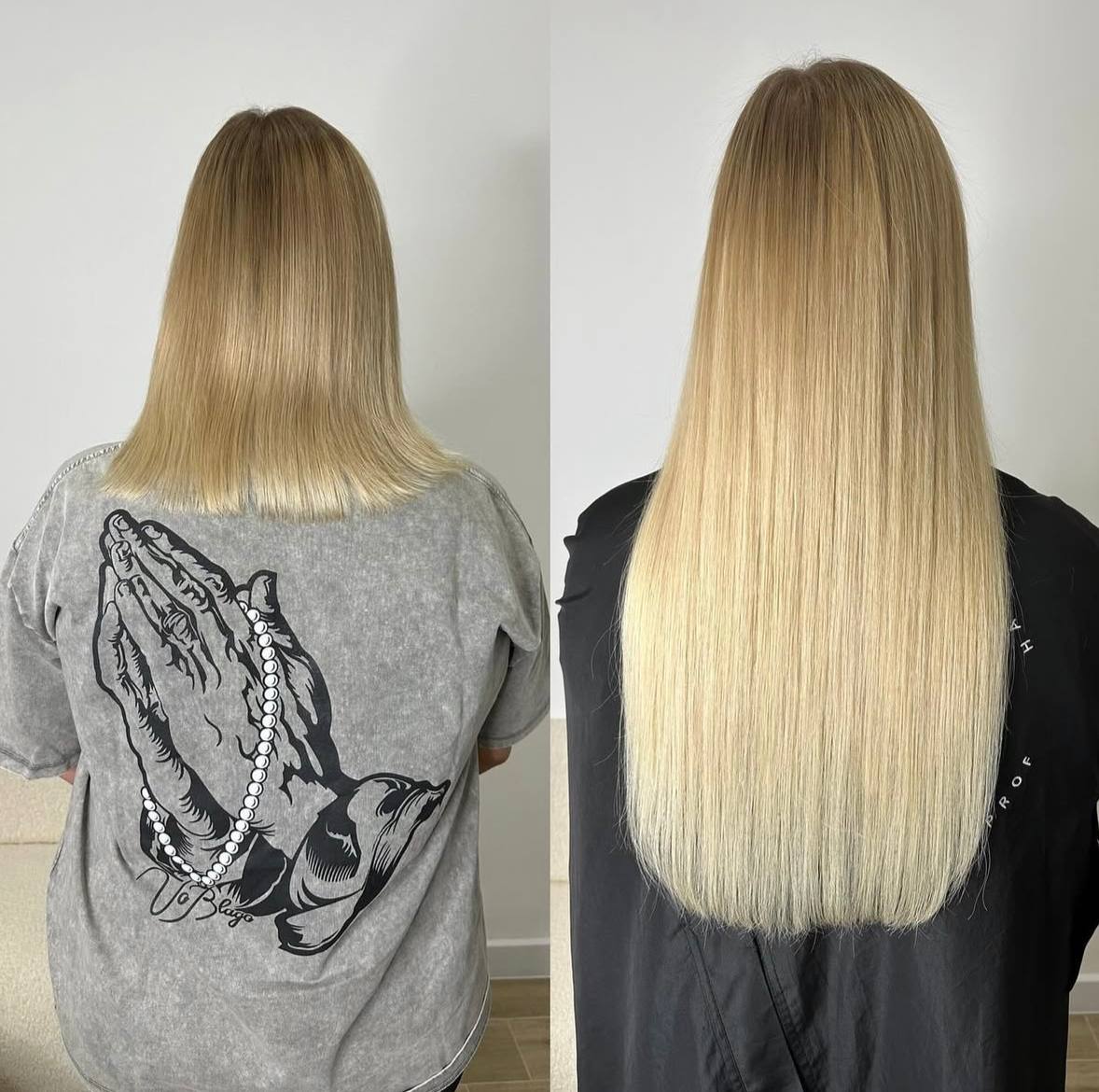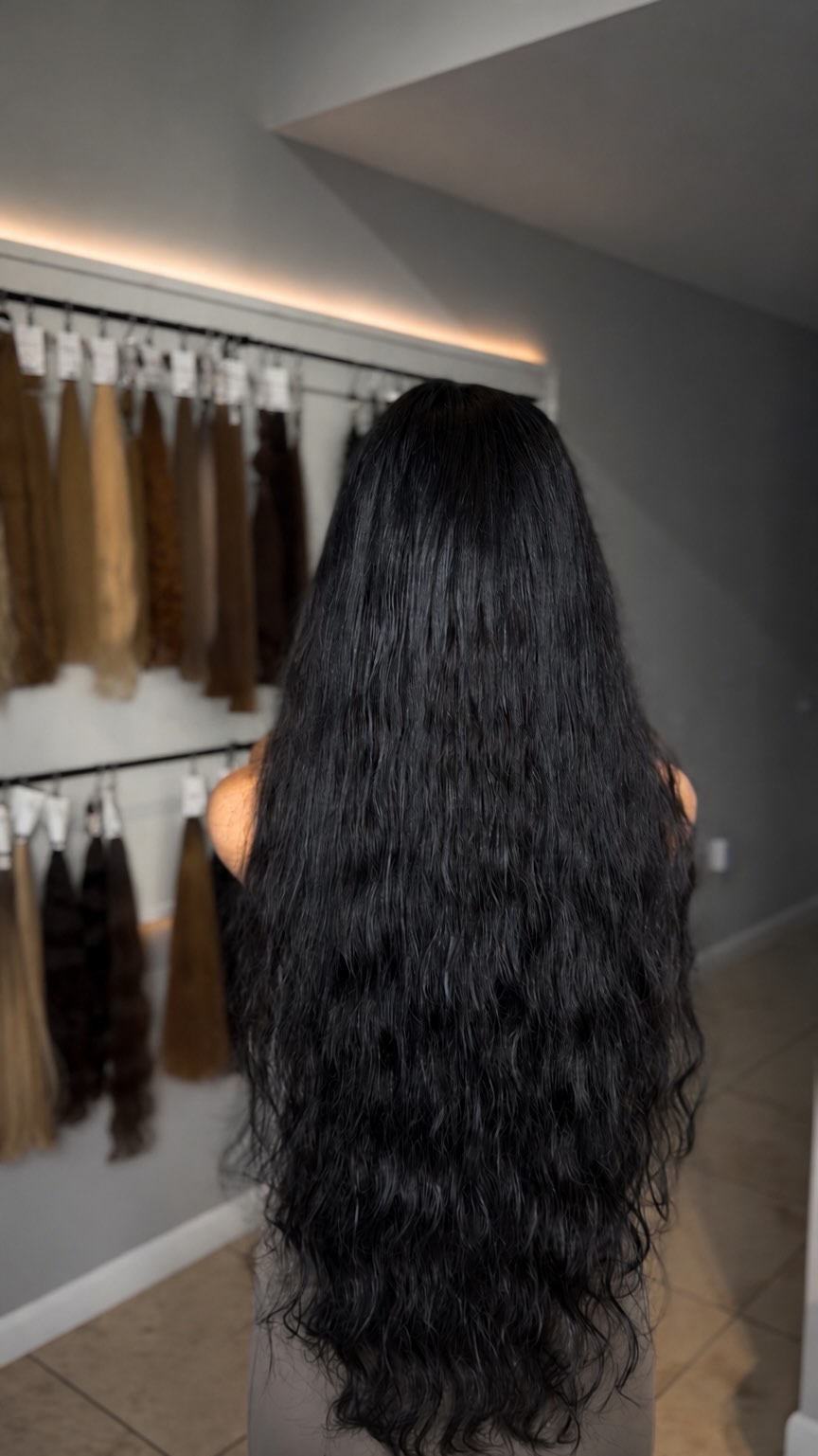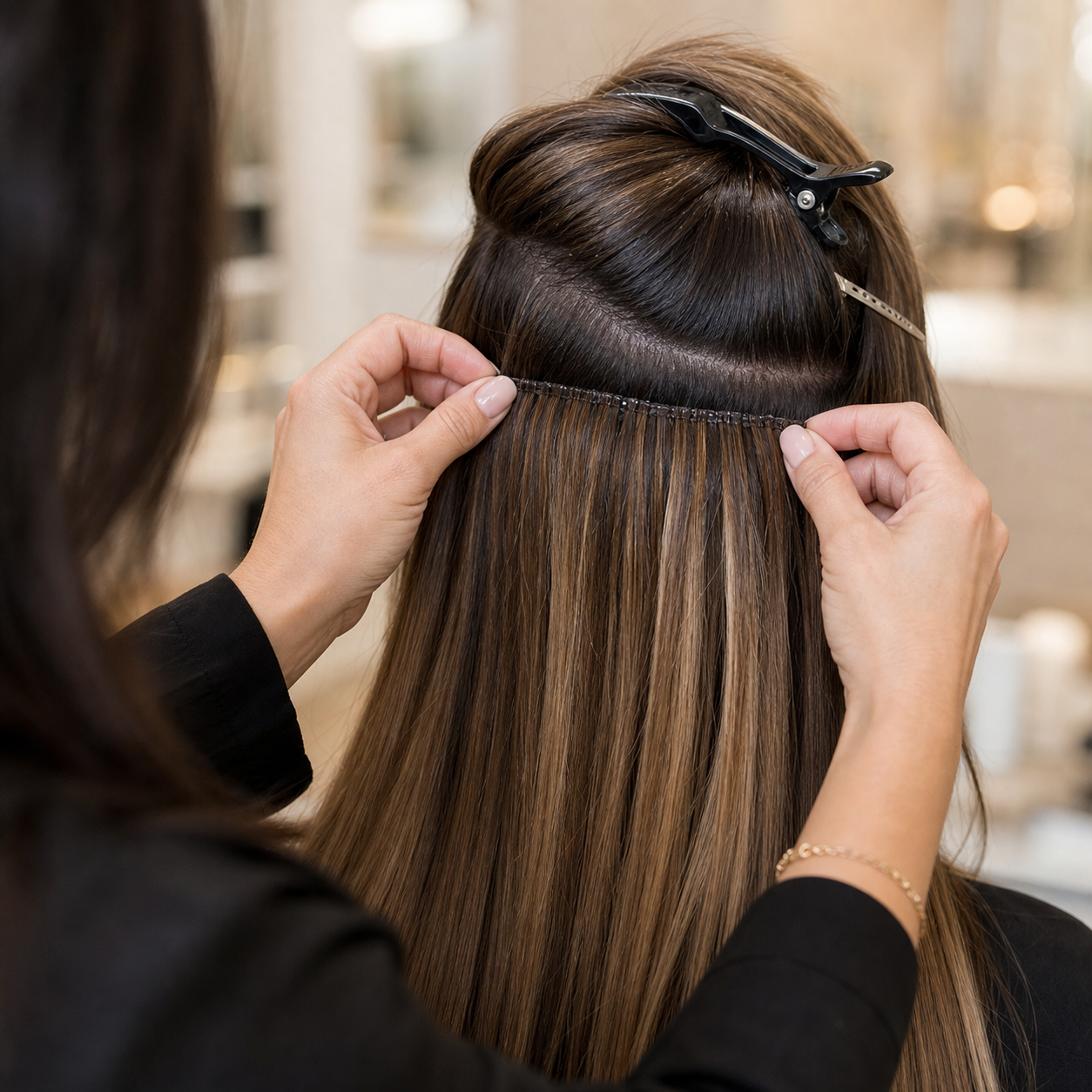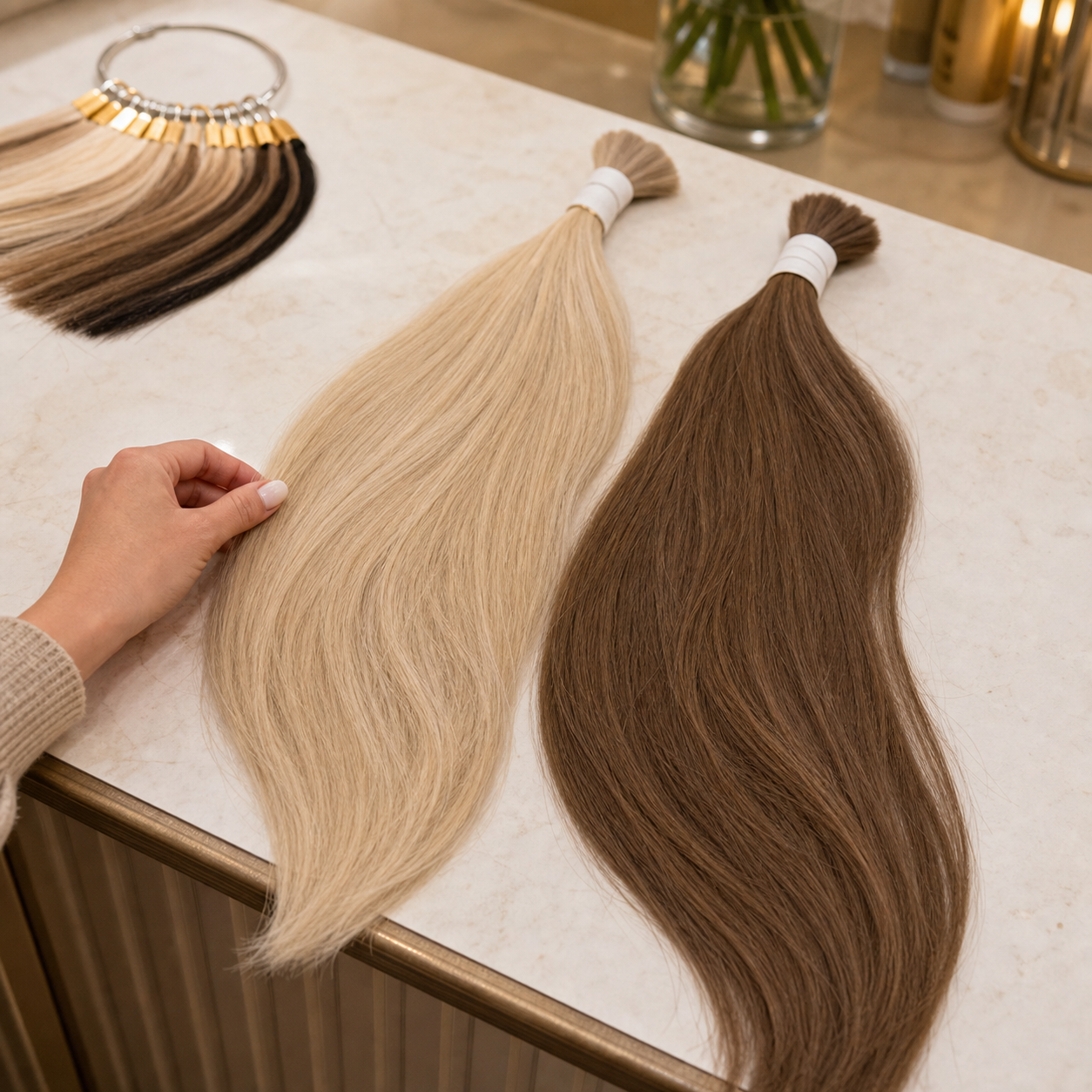
When clients ask why two sets of hair extensions can look so different, the answer almost always comes down to the hair itself. At Vizavi Beauty in Midtown Miami, we work with premium Slavic and European human hair, and understanding the difference helps you invest wisely.
This guide compares Slavic and European hair on quality, coloring potential, longevity, and value. If you already know you want extensions, you can review your options on our hair extensions service page or talk it through in a consultation.
Why Hair Quality Matters Most
The method holds the hair in place, but the hair quality decides the result. High-quality human hair has the cuticle intact and aligned in one direction, which prevents tangling, holds color, and keeps a healthy shine wash after wash. Lower-grade hair tends to tangle, dull quickly, and need replacing far sooner.
Slavic Hair Extensions
Slavic hair is prized for being ultra-fine, soft, and naturally lightweight. It blends beautifully with fine natural hair and is the most colorable, which makes it the go-to for blondes and custom shades.
Slavic hair is usually best for:
- Fine natural hair that needs a seamless blend
- The lightest blondes and custom color work
- Clients who want the longest possible lifespan
- Investment sets meant to last well over a year
European Hair Extensions
European hair is a soft, reliable mid-tier option with natural texture and dependable quality. It suits everyday wear and medium thickness at a more accessible price point.
European hair is usually best for:
- Everyday natural looks
- Medium thickness and natural blends
- Clients who want quality without the top-tier investment
- Coloring within a couple of shades of the original
Slavic vs European: Side by Side
| Factor | Slavic | European |
|---|---|---|
| Texture | Ultra-fine, silky | Soft, natural mid-weight |
| Best for | Fine hair, blondes, investment sets | Everyday wear, medium hair |
| Coloring | Fully colorable | Within ~2 shades |
| Longevity | 12–24+ months | 8–12 months |
| Tier | Premium to top premium | Mid-tier |
Which Should You Choose?
If you have fine hair, want the lightest blonde, or plan to keep your set for a long time, Slavic hair is usually worth the investment. If you want a natural, reliable result at a more accessible price, European hair is an excellent choice. Your stylist will also factor in the method you choose — compare those in our guide on INVISI Links vs tape-in extensions.
FAQ
Is Slavic hair better than European hair?
Slavic hair is finer, more colorable, and longer-lasting, which makes it ideal for fine hair and custom blondes. European hair is a high-quality, more accessible option for everyday natural looks. The best choice depends on your hair and goals.
Why is Slavic hair more expensive?
Slavic hair is rarer, finer, and holds color and shine longer, so it costs more upfront but can last significantly longer than lower-grade hair, making it a strong long-term value.
Can both types be colored?
Slavic hair is fully colorable and the best option for light blondes. European hair can usually be adjusted within about two shades. Always have coloring done by a professional to protect the hair.
How long does each type last?
With proper care, European hair typically lasts 8–12 months and premium Slavic hair can last 12–24 months or longer. See our guide on how long hair extensions last.
The Bottom Line
Slavic and European hair are both premium human hair, but they serve different needs. Slavic is the finest, most colorable, and longest-lasting; European is a soft, reliable, more accessible option. Matching the hair to your natural texture and goals is the key to a flawless result.
Book a consultation and let a Vizavi stylist help you choose the right hair: book a hair consultation