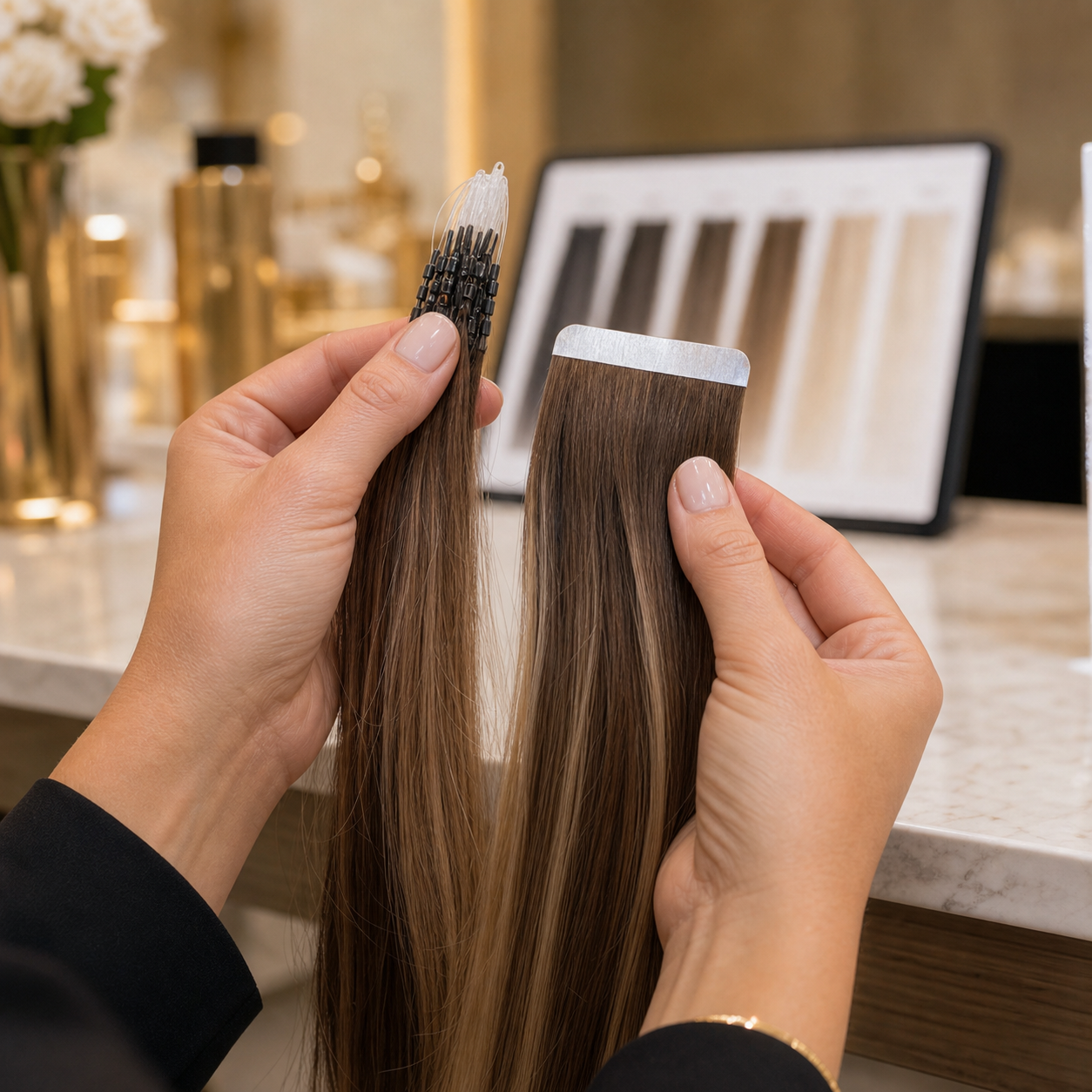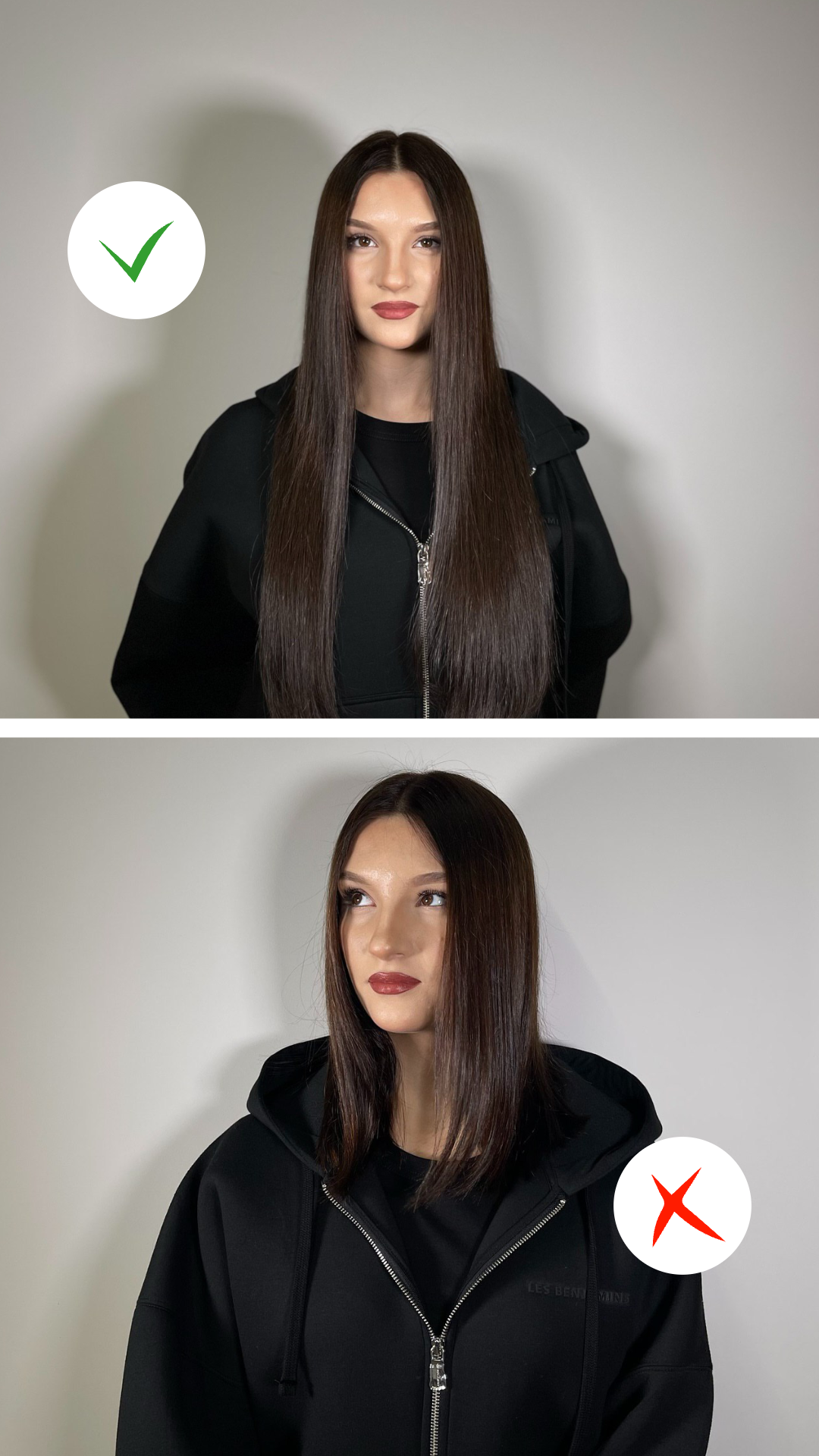
The most common mistake when buying hair extensions is matching them to the roots. Extensions live next to your ends — the lengths people actually see — and ends are almost always lighter and warmer than the roots. Here is how to read a color chart properly, what the shade families mean, and when to stop guessing and let a colorist match you in person.
Rule one: match the ends, not the roots
Take your photo in daylight, hair down, and look at the bottom third. That is the zone your extensions must blend into. If your hair is one solid color from root to end, this is easy. If you have any dimension — highlights, balayage, a grown-out color — read on.
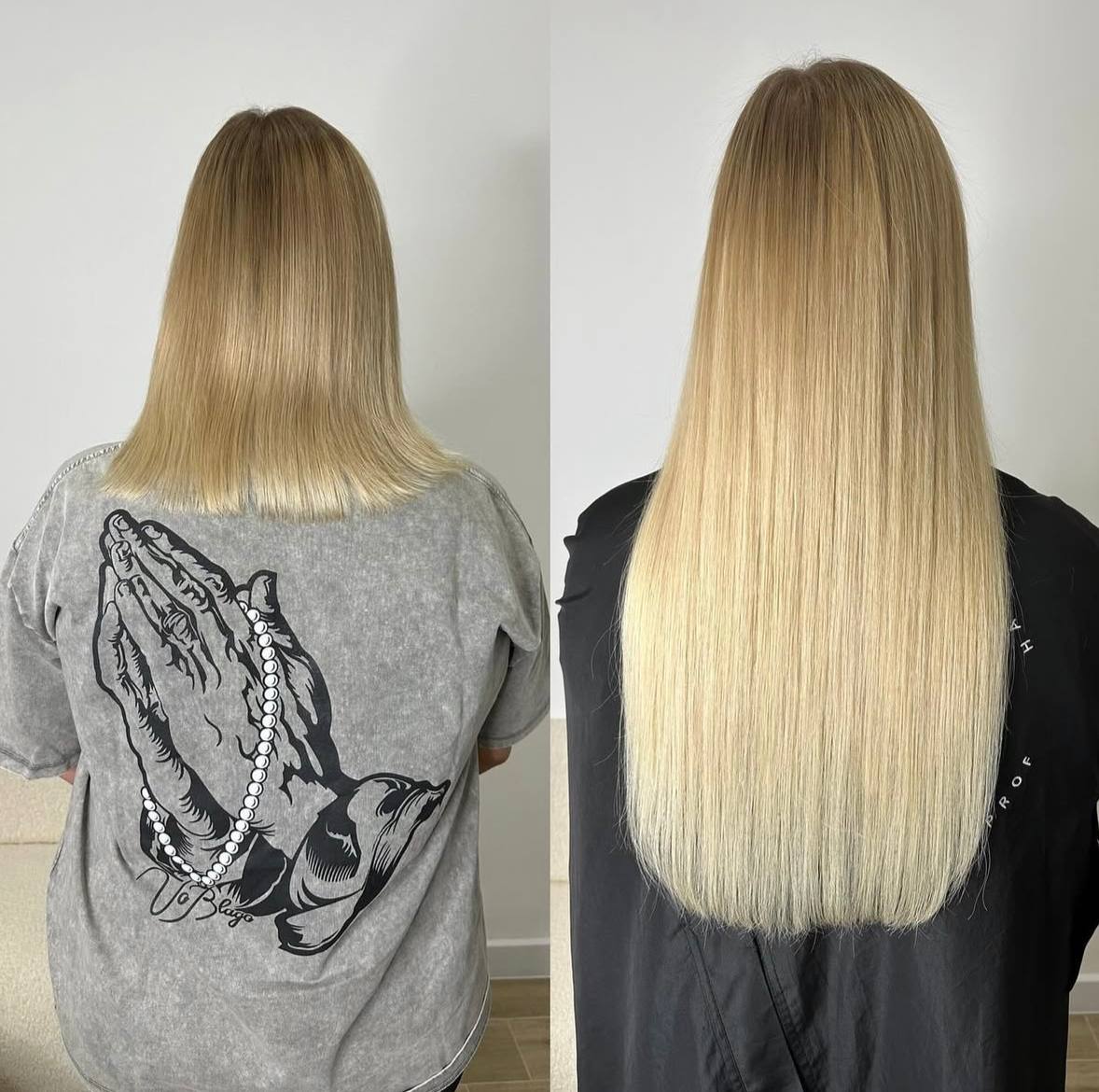
The shade families
- Black & Dark Brown — deepest tones; usually the easiest to choose online because dimension matters least.
- Chocolate Brown — a popular warm brunette; warm mid-brown that suits many olive and golden skin tones.
- Ash Brown — cool, smoky brunette; pick it if your hair photographs "greyish" rather than golden.
- Blonde & Beige Blonde — golden vs neutral blondes; beige suits many dimensional blondes.
- Platinum — the coolest, brightest blonde; it needs a precise undertone match.
- Copper & Red — pigment-rich tones where lighting changes everything; a physical match is strongly recommended.
Shade availability changes with stock. Browse the Slavic hair in our shop for a starting point, then ask at consultation which shades and lengths are on hand for your install date. Photos help you narrow the family; the bundle held against your hair in daylight is the real test.
Undertone: the difference you notice later
Two blondes of the same depth can still clash: one leans golden (warm), the other ash (cool). Skin undertone and hair undertone are not the same thing, so the jewelry test (whether gold or silver flatters you) is at best a rough hint. Look at the hair itself in daylight instead: golden or honey reflections read warm, smoky or grey reflections read cool. Many colorists lean toward the cooler of two candidate shades because warmth can be added with a gloss while taking warmth out of extension hair is harder — but that is a call to make at consultation, not from a chart.
Highlighted or dimensional hair
If you wear balayage, babylights or a money piece, a single flat shade will look like a block next to your lengths. The working approaches:
- Blend two shades — for example chocolate + beige blonde installed in alternating sections to mirror your dimension.
- Match the mid-tone — pick the shade of your overall "average" color, then let a stylist tone it into place.
- Tone after install — quality human hair takes toner and can be glossed darker or warmer. (Lightening extension hair is not something we recommend — it shortens the hair's life.)
Which approach fits your hair is decided at consultation, once a colorist has seen your dimension in daylight.
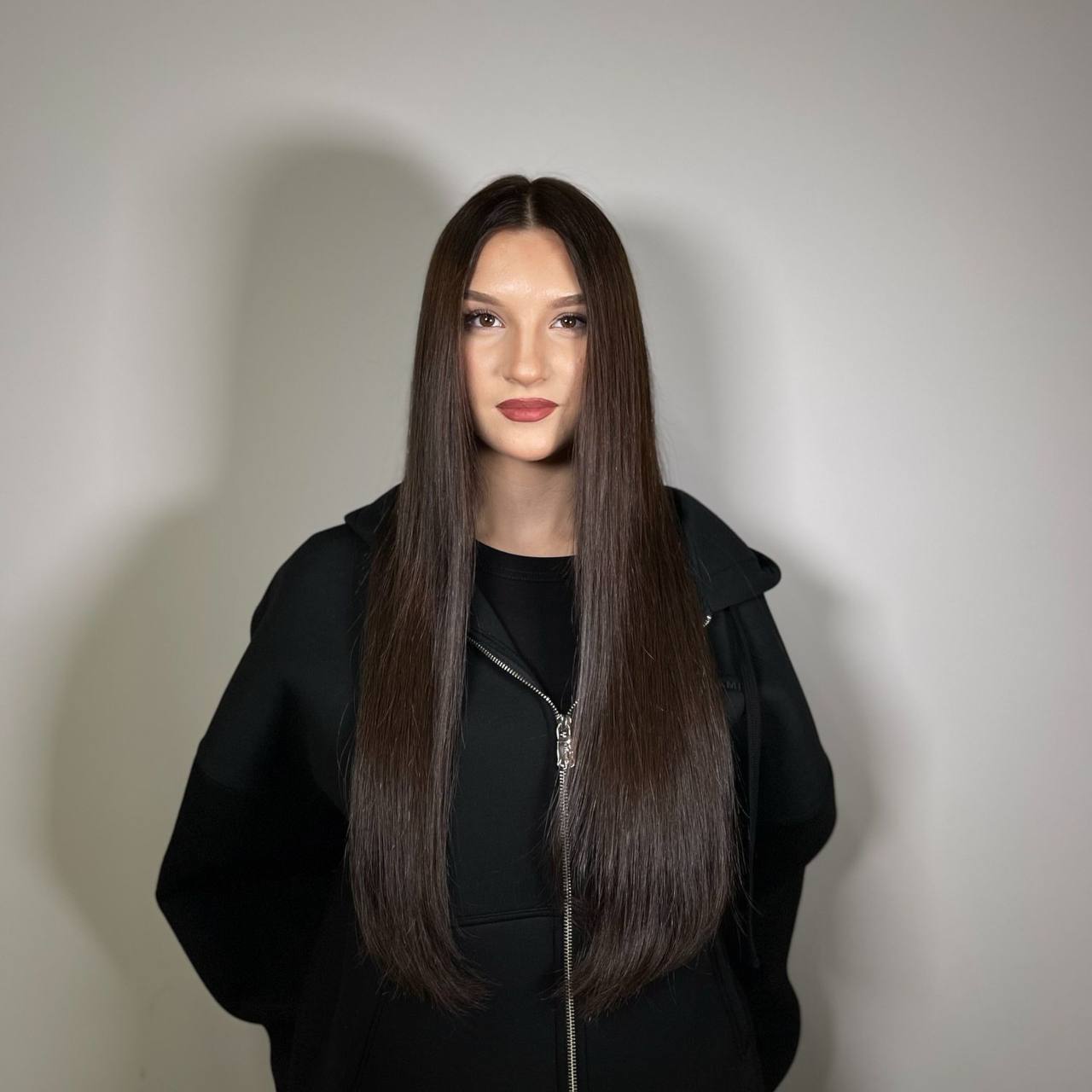
When to stop guessing: the in-person color match
If your color involves more than one shade, or you are between two families, a free consultation at our Midtown Miami studio ends the debate: we hold bundles against your hair in daylight, check the undertone, and confirm which hair can be reserved for your install date. It is the step that makes the result look grown, not attached.
FAQ
Should I match hair extensions to my roots or ends?
To the ends — extensions blend into your lengths, and lengths are almost always lighter and warmer than roots.
Can hair extensions be toned or dyed?
Quality human hair takes toner and can be glossed darker or warmer. We do not recommend lightening extension hair — bleaching shortens its lifespan. Ask at consultation before planning any color work on the hair.
What if my hair has highlights?
Blend two shades in alternating sections, or match the mid-tone and let a stylist tone the set into place. A single flat shade next to dimensional hair reads as a block. Your colorist confirms the approach at consultation.
How do I get color-matched in Miami?
Book a free consultation at our Midtown studio — we match bundles against your hair in daylight and confirm which hair can be reserved for your installation.