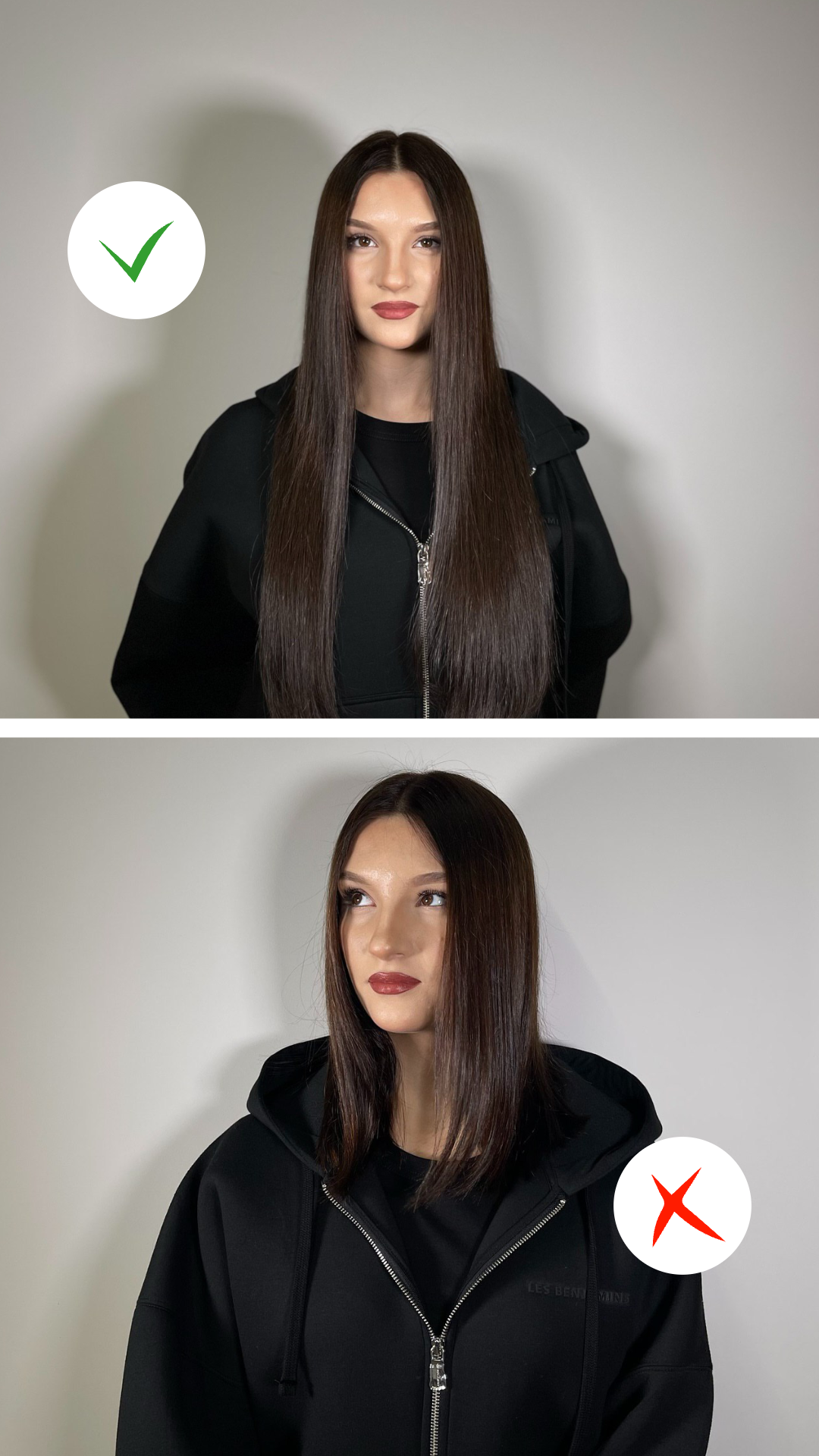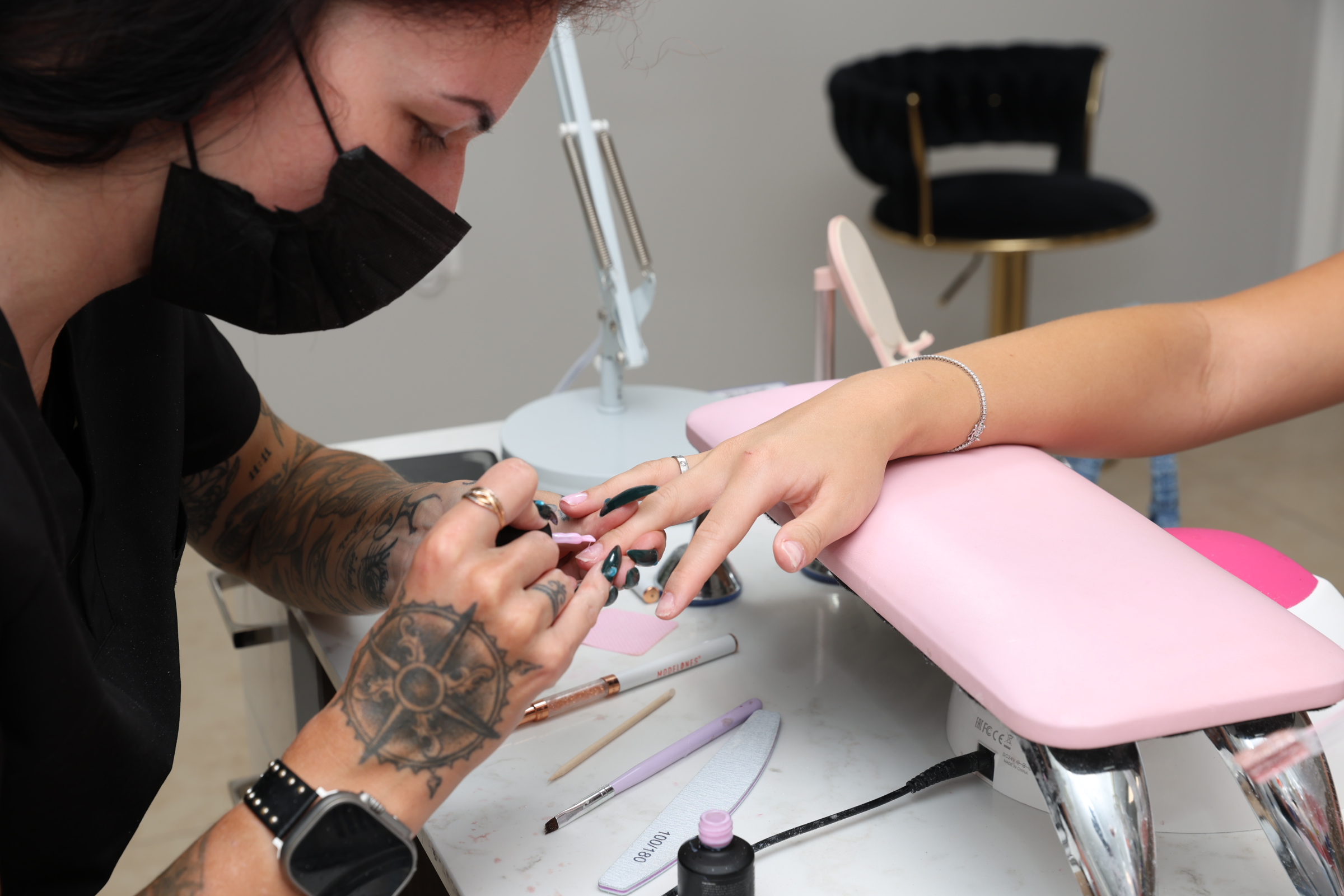
There is no best hair extension method. There is a method that suits your density, your routine, and how often you can realistically come back — and three that do not.
This guide is about that decision. For hair quality, which is a separate choice, see Slavic vs European hair. For a direct method comparison, see INVISI Links vs tape-ins.
Start With Your Own Density
Pick up a section of your hair at the crown and look at how much scalp shows.
Fine or sparse hair needs small attachment points. Anything bulky shows through and pulls. Individual-link methods such as K-tips distribute weight across many small bonds, which is why they suit fine hair better than a continuous panel.
Medium density is the flexible case — most methods work, so the decision moves to lifestyle and maintenance.
Thick hair usually wants length rather than volume, and needs enough added hair to blend without looking layered on top. Wefts add the most per hour of installation, which makes them efficient here.
Then How You Wear It
Ponytails and updos. If your hair goes up regularly, placement matters more than method. Say so at consultation so the perimeter is planned around it — this is the single most common regret when it is skipped.
A defined part or fringe. Individual links give the most control near a part, because each bond can be placed precisely.
Down, most of the time. Tape-ins sit flat and are quick to install, which works well under fine straight hair worn down.
The gym four times a week. Damp hair is weaker, and bonds sitting in damp hair are the ones that slip. Smaller, well-distributed attachment points hold up better than large ones.
Then How Often You Can Come Back
Every method needs move-ups every eight to ten weeks. That is not negotiable — it is your own hair growing.
What differs is what happens when you are late. Individual links tolerate a stretched schedule reasonably. Tape-ins need refreshing more often and show a delayed appointment sooner.
If you cannot commit to a visit every couple of months, say so before you book. It changes what we would recommend, and sometimes it means recommending against extensions entirely.
The Three Methods
INVISI Links (K-tips) — small keratin-bonded strands applied individually and cut into your own hair. Natural movement, discreet, the most flexible placement. Installation from $550 for a new set of about 180 links; move-ups from $60.
Tape-ins — thin panels taped either side of a section. Fast to install, sit flat, need refreshing more often. Installation from $300.
Wefts — a continuous strip attached along a row. The most volume per hour of installation, priced per row from $150.
Hair is quoted separately by tier and grams, because the hair is yours to keep and reuse across several move-ups.
Colour Comes Before Method
A perfect installation in the wrong shade looks worse than an average installation matched properly. If your own colour is due to change, do the colour work first or plan them together — matching to a shade you are about to leave behind wastes the set.
The Consultation Does This For You
Fifteen minutes, free, and it exists to stop you booking a four-hour appointment for the wrong method. Your stylist checks density, condition at the mid-lengths and ends, your shade against the hair we stock, and how you actually wear your hair. You leave with a written quote before anything is scheduled.
We are at 3250 NE 1st Ave in Midtown Miami. Book a consultation, or see the hair extensions page.
Coming from Brickell? Here is what to expect.